
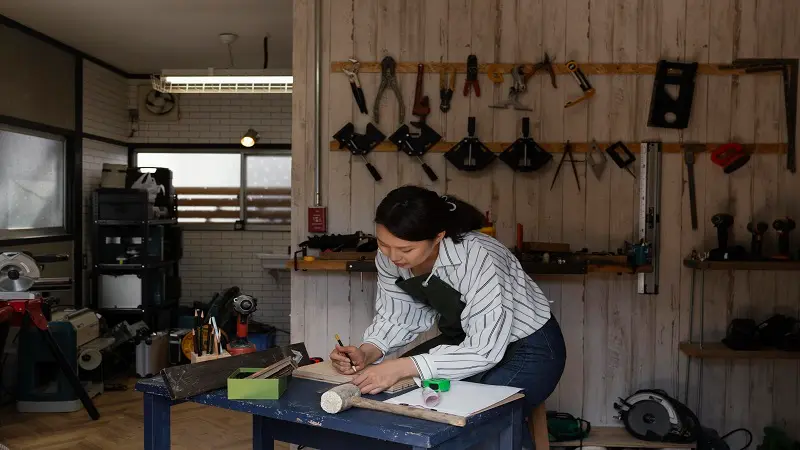
Your garage might have started as a place to park your car, but over time, it’s probably become a storage space for everything that doesn’t fit inside the house.
Tools, paint tins, camping gear, sports equipment, Christmas decorations and boxes of things you might need someday. Before you know it, there’s barely enough room to walk around, let alone park your car. Clearing everything out over the weekend might help, but the clutter often comes back when there’s no proper storage system in place.
The key to keeping your garage organised is giving everything a place where it’s easy to find, use and put away. Garage shelving can make a big difference, especially when you need to store heavy tools, equipment and boxes without taking up valuable floor space.
In this guide, we’ll look at how to organise your garage, choose the right shelving and set up a storage system that’s easy to maintain.
Why Garages Need a Different Approach to Storage
Storage that works well inside your home might not last as long in the garage.
Garages are often exposed to changing temperatures, moisture, dust and dirt. Concrete floors can also become damp, especially during wet weather.
These conditions can damage regular household furniture, which is why choosing the right storage materials matters.
Different shelving materials have their own limitations:
Particle board: Can absorb moisture, causing it to swell, warp or lose strength over time.
Plastic shelving: Handles moisture well and is easy to clean, but lighter-duty models may bend under heavy tools or equipment.
Timber shelving: Can be strong and durable, but untreated timber may be vulnerable to moisture and termites, particularly in some parts of Australia.
For garages storing heavy tools, paint tins, car accessories and bulky equipment, it’s worth choosing shelving designed to handle both the weight and the conditions.
The right shelving should be strong enough for what you’re storing, easy to clean and able to withstand everyday garage use.
Steel shelving is the standard choice for garages because it handles all three challenges. It supports heavy loads without flexing, resists moisture when coated properly, and does not attract pests. A well-built steel unit rated to 400 or 800 kilograms per shelf handles everything from storage tubs to car parts without any concern about the shelf bowing under the weight.
Planning the Layout Before Buying Anything
The most common mistake is buying shelving first and figuring out where it goes later. A garage has constraints that a spare room does not: the car needs clearance to open its doors, the roller door track sits close to the ceiling on both sides, power points and light switches sit at fixed positions on the walls, and access to the laundry or house entry door cannot be blocked.
Step one is measuring the usable wall space. Stand in the garage and identify which walls are available for shelving. In a single-car garage, that is typically the back wall and one side wall. In a double garage, the back wall and both side walls offer more room, but the side walls lose depth wherever the car doors need to swing open.
Step two is mapping what goes where. Group the items by how often they are used:
Weekly or daily: tools, cleaning products, pet supplies, sports gear. These go at arm height on the most accessible shelving, close to the garage entry.
Monthly: seasonal sports equipment, car care products, bulk household supplies. Mid-height shelves or a second shelving bay further from the entry.
Rarely: holiday decorations, archived paperwork, luggage, camping gear used once or twice a year. Top shelves or the least accessible corner of the garage.
This is not about being rigid. It is about making sure the things used most often are not buried behind the things that sit untouched for eleven months of the year.
What to Look for in Garage Shelving
Not all shelving sold for garage use is built the same way. A few details separate units that last from ones that need replacing in a couple of years.
Load rating per shelf. This is the maximum weight each individual shelf can hold when the load is evenly distributed. A shelf rated to 200 kilograms sounds generous until it holds four 20-litre paint tins, a car battery, and a toolbox. Heavier-duty units rated to 400 or 800 kilograms per shelf leave more margin and handle the unexpected heavy item without risk.
Shelf adjustability. Fixed shelves force everything to fit the same gap. Adjustable shelves, where the shelf height can be changed in 50-millimetre increments by repositioning the beam clips, let the unit adapt to different items over time. A shelf set low for heavy toolboxes today can be moved higher next year when the storage needs change.
Coating and finish. Powder-coated steel resists rust far better than bare or painted steel. In coastal areas or garages without weatherproofing, the coating quality is the difference between a unit that looks the same after five years and one that shows surface rust within twelve months.
Assembly method. Boltless shelving systems use a mallet to tap the beams into the uprights and require no tools beyond that. Bolted systems are more rigid but take longer to assemble and are harder to reconfigure. For a home garage where the layout may change over time, boltless systems are more practical.
Making the Most of Vertical Space
When organising a garage, it’s easy to focus on the floor and forget about the space above it.
Most residential garages in Australia have ceilings around 2.4 to 3 metres high. If your shelving only reaches 1.8 metres, you could be leaving valuable storage space unused.
Taller shelving units, around 2 to 2.4 metres high, can help you make better use of that space without taking up more room on the floor.
Keep items you rarely use on the higher shelves. Things like Christmas decorations, camping accessories and seasonal equipment can go into labelled storage tubs with lids.
This keeps them protected from dust and makes it easier to find what you need without opening every box.
Use Wall Space for Awkward Items
Not everything fits neatly onto a shelf.
Garden tools, extension cords, hoses and bicycles often end up leaning against the wall or taking up floor space.
Wall-mounted hooks, pegboards and tool racks can help keep these items organised and out of the way.
For example, you could use:
Hooks for garden tools, hoses and extension cords
Pegboards for frequently used hand tools
Wall-mounted bicycle racks to free up floor space
Shelving for storage tubs, paint supplies and boxed equipment
Combining wall storage with freestanding shelving gives you more room to move around and makes everyday items easier to reach.
Anchoring and Shelving Safety
Garage shelving needs to be stable, especially when you’re storing heavy tools, equipment and boxes.
A fully loaded shelving unit can become dangerous if it tips forward. This is particularly important in garages where children or pets may be present.
Tall shelving units should be properly secured to prevent tipping.
Many steel shelving units have mounting points that allow them to be attached to a wall. Use the fixings recommended by the manufacturer and make sure they’re suitable for your wall type.
For shelving positioned away from a wall, check whether the manufacturer provides floor anchors or other suitable anti-tip options.
Keep Heavy Items on Lower Shelves
How you arrange items on your shelves also affects stability.
A simple rule is to store heavier items at the bottom and lighter items towards the top.
For example:
Bottom shelves: Heavy tools, car parts, large equipment and bulky containers
Middle shelves: Frequently used items, cleaning supplies and smaller toolboxes
Top shelves: Lightweight seasonal items and things you don’t need regularly
Keeping heavier items lower helps maintain stability and makes them easier to lift without reaching overhead.
It’s also important to check the weight capacity of each shelf. Avoid overloading one section, even if the shelving unit looks strong enough.
Final Thoughts
An organised garage isn’t just about clearing out clutter. It’s about having a storage system that makes everything easier to find and put away.
Using taller shelving, wall-mounted storage and labelled containers can help you make better use of the space you already have.
Choose shelving that can handle the weight of your equipment, secure it properly and keep frequently used items within easy reach.
With the right setup, your garage can stay organised long after the initial clean-up, and you might even have enough room to park your car again. See more

