
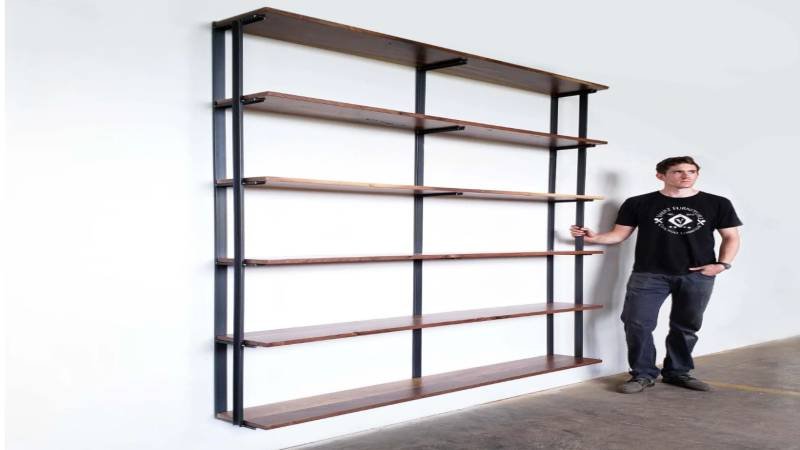
It might seem like all shelf brackets are the same, but when you’re starting to pull one, it’s loose because you’re placing too much weight on it. This is an easy mistake to make that will cause broken walls, sagging shelves, and costly repair work. When you’re in the hardware store, pondering which bracket you want for your project and which one is best, this guide covers the options available and how you can decide which is finest for you.
What Are Brackets for Shelves?
At the most basic level, a bracket is the piece of hardware that takes the weight of a shelf and sends it into the wall structure instead of just relying on the wall surface. Most fall into two shapes: an L or a triangular gusset. Either way, one side anchors into the stud (or a wall anchor, if a stud isn’t available) and the other holds the shelf up. No bracket means nothing keeping the shelf level, and nothing is stopping it from pulling loose the moment weight is put on it. The material and thickness decide how much weight it can actually take, which is really the whole reason to think about bracket choice instead of just grabbing whatever’s cheapest on the rack.
How do floating shelf brackets actually work?
Floating shelves are a bit of a magic trick. There’s no visible bracket; it’s hidden inside the shelf, usually a steel rod or a plate that bolts into the studs and gets swallowed up once the shelf slides over it. Compared to most brackets for shelves, this style is more about the clean look than raw weight capacity, though weight capacity is still the one spec that matters, and it’s usually printed on the box, so don’t skip reading it, especially if the shelf will hold anything heavier than a few picture frames. Some kits come with the shelf already attached. Others are just the hardware, meant to pair with a board you already own. In that case, double-check that the rod thickness lines up with your shelf’s depth, or it won’t seat properly.
Why Choose Metal Brackets Over Other Materials?
If you’re not trying to hide the hardware, metal brackets are the obvious choice. They come in plain L-shaped steel or fancier wrought-iron styles if you want the bracket itself to look like part of the design. Metal holds more weight than plastic, which is why it’s the better pick for a garage, a pantry, or anywhere you’re loading real weight onto a shelf rather than a couple of picture frames. Two things worth checking before buying: how thick the metal actually is, and how long the arm is that bolts to the wall. Longer arm, better weight distribution, that’s the difference between a shelf that stays flat and one that slowly droops at the front.
How to Hang Brackets for Shelves?
Hanging shelf brackets is not a complicated matter, but one step skipped could lead to a droopy shelf and a ruined wall. Use these steps to help keep your brackets level and locked solidly into position.
- Find and mark your studs: Use a stud finder on the wall and mark where the centers are. You cannot simply screw into drywall and depend on that to support a shelf when it’s loaded.
- Level and mark: Line your first bracket up to your stud mark. Make sure it is straight by putting a level against it, then mark your pilot holes
- Pre-drill the holes: Prior to driving any hardware, drill pilot holes at your marks. This prevents your drywall from cracking or the wood studs behind it from splitting.
- Tighten the bracket with long screws: Insert the screws directly into the drilled holes. The screws you use should be no less than 2 inches long, so they will go deep into the core of the stud.
- Align and mount the second bracket: Stop estimating the height of the next bracket. Using a level or straightedge, bridge across from the installed bracket to mark the same height on the adjacent stud, before repeating the drilling process.
What Are the Different Types of Mounting Brackets?
L-brackets are the standard, cheap, and everywhere, no surprises. Corbels do the same job but are meant to be seen, carved wood, molded resin, sometimes genuinely decorative pieces in their own right. Floating brackets hide completely inside the shelf, as covered above. Track systems let you slide a shelf up or down the wall without drilling new holes each time, which is why they show up so often in closets and pantries where storage needs change. And heavy-duty gusset brackets, wider, thicker, no attempt at subtlety, are what you want in a garage or workshop where load capacity matters more than how it looks.
Conclusion
In the end, selecting a suitable shelf bracket depends on the fusion of design with functionality. You can typically just purchase the cheapest or prettiest option you see available, but if you stop to take two minutes and read the weight capacity of the product, find your studs, and ensure your hardware sits even, you’ll save yourself lots of aggravation later. Whatever style brackets you choose—whether a sleek and barely-there floating bracket or an exceptionally heavy-duty metal gusset—the prep work gets things flat, standing on the wall. See more: decoradhouse.org.