
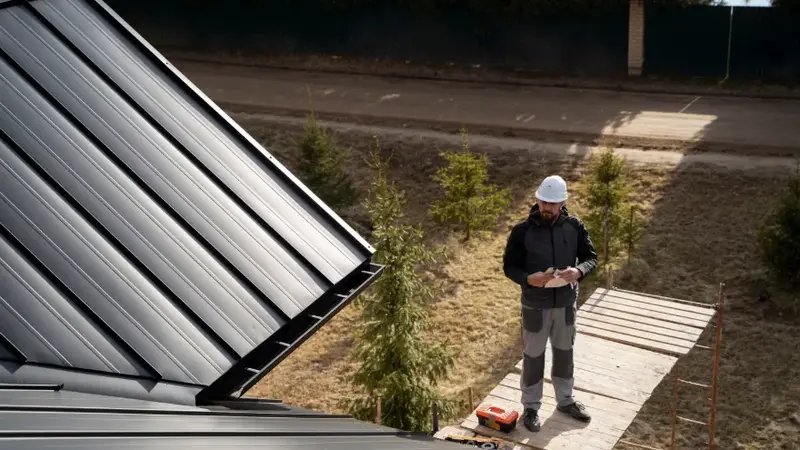
The roof rarely fails at once. The problems build slowly. The issues often stay silent. On one occasion, you spot a blemish on the ceiling or detect a damp odor in the loft. At this moment, the destruction is already larger most of the time than you presume. You can catch roof issues early if you know where to look.
The guide walks through the warning signs. The guide shows the risks. This report lays out the measures that can be taken to safeguard a house prior to the situation getting worse. By monitoring the rooftop and recognizing the dangers in their initial stages, one can stop the deterioration of the already existing damage and also ensure the safety of the home.
Why Roof Problems Aren’t Always Obvious?
A roof appears normal from the ground, yet it may be experiencing issues. Materials can be damaged by weather conditions, aging, and poor installation methods before any visible signs appear. Water enters buildings through small openings that form when shingles become loose or flashing develops tiny cracks. The entry of moisture into roof structures causes it to spread throughout the system until it reaches the roof deck. The roof deck gradually weakens as water continues to penetrate through the surface.
Visible Warning Signs Every Homeowner Should Recognize
The need to climb a ladder does not exist for identifying initial problems. The inspection’s initial phase must be the examination of shingles. The roof’s water-resistance is already undermined in case the shingles curl, crack, or are completely gone. The presence of granules in the gutters indicates that the shingles are already dead.
The places near chimneys and roof vents are the most fragile, and their construction makes them so. The structure becomes susceptible to water entry when flashing material rusts, separates from its position, or lifts away from its base. Gutters are the telltale signs of the system’s condition. As a result of several factors, such as clogged gutters, water spilling over, or gutters discharging too much, the roof edge can get damaged.
Ceiling stains sometimes signal the presence of water in the building, blistered paint, and sudden humidity increase, among other things. The attic area provides the most apparent indications of roof problems. The presence of sunlight through wooden boards, together with damp insulation and musty smells, indicates that roof failure will occur before any interior damage becomes visible.
Hidden Roof Damage You Can’t Afford to Ignore
The most dangerous issues exist in hidden areas. The water that collects between the layers of the roof can stay unnoticed for weeks before the roof shows any issues. A roof that is getting worse, walls with mold, and even the slumping of building parts will all happen during this long wait.
Another peril that Mother Nature brings along with winter is ice dams. The process of snow melting results in frozen water that seeps beneath shingle layers. The damage spreads throughout the entire roof structure until spring, when the issues become visible.
The process of early detection helps prevent this type of concealed deterioration. The point at which repair signs become visible marks the beginning of substantial repair costs.
When Weather Makes Things Worse
The roof undergoes complete testing under all seasonal conditions. The force of wind creates enough pressure to break the seal between shingles. Hail damage in particular makes the surface more susceptible to water intrusion since it forms several entry points. Heavy rain immediately causes water to infiltrate any weak spot in the roof, whereas snow buildup can eventually create a leak when it melts through the roof.
The sun creates damage to roofing materials through its continuous exposure. Shingles become brittle because UV radiation dries them out over extended periods. All roofs experience weather damage that accumulates over time. Performing an exterior roof inspection after major storms is an essential practice. The immediate effect of storm damage become visible during the first inspection.
The Power of a Professional Roof Inspection
A professional inspection is the best way to prevent minor problems from developing into major issues. Inspectors perform a complete assessment that extends beyond traditional shingle inspections. In many cases, they’ll also use tools like a shingle estimator to judge material wear and forecast future replacement needs more accurately.
The roof inspection procedure encompasses a meticulous assessment of the roof deck structures, ventilation systems, underpayment materials, moisture accumulation points, and the flashing system. The inspectors are well-informed about the interactions between systems, which gives them the ability to spot issues that the homeowners cannot discover.
Inspections are often thought of as a last resort, and only when the roof visibly suffers damage, by homeowners. Detecting possible flaws when they are the tiniest is what the yearly or the after-harsh-weather-inspection practice helps homeowners do, which in turn saves them money. A thorough inspection report is an excellent source that exhaustively explains your roof’s current state and also gives recommendations for repairs and maintenance, both immediately and over a period.
How to Know When Repair Isn’t Enough
The point arrives when additional patching work will not fix the issue. The natural lifespan of roofs determines when replacement becomes necessary, as shingles lose their granules and multiple sections show signs of damage. The roof deck is to be replaced when softness is observed or when the water has intruded into the system through different spots, since fixing at this point will only delay the downfall, which is already inevitable.
Replacement of your roof may look like a difficult task, but it actually shields your house from expensive structural damage, and at the same time, it will not cost you more than thousands of dollars in future repair bills.
Choosing the Right Roofing Contractor
Indeed, contractors’ quality is quite different among the different professionals. A trustworthy Toronto Roof Repair company will not only show you the license and insurance as a matter of course but also be able to give you the basic material, process, and warranty info. A good roofer will also give you a written estimate, but will not push you to decide immediately.
Any contractor who won’t discuss your queries or treats your worries lightly should be looked upon as a suspect. Due to the great importance of the roofing job, it would be very unwise to decide based on uncertain claims.
Protecting Your Roof Long-Term
A roof stays healthy through regular maintenance activities. The results from gutter cleaning, ventilation upgrades, and instant replacement of shingles together are measurable. Replacement of shingles with impact-resistant and waterproof underpayment in certain weather conditions gives longer protection, which in turn is a value that lasts for a long time.
A small amount of maintenance work produces significant results. A roof that receives proper maintenance will extend its lifespan while delivering superior performance at lower operational costs throughout its entire service period.
Conclusion
The signs of roof damage remain hidden until they produce severe effects. Your problem detection rate influences your repair costs. Not only visual checks but also professional roof assessments every year, as well as regular attic inspections, help you prevent major developments in the first place. Don’t worry about flirting with your customers. Let your customers take the initiative and enjoy your company, service, and whatever you sell.