
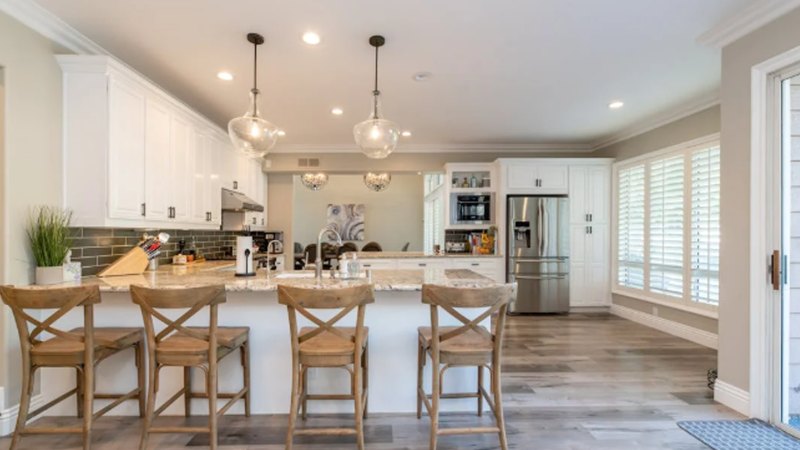
The contemporary view of houses has shifted from mere sleeping and eating spots to that of living ecosystems where constant interaction between the environment and its users is being done for comfort and well-being, more or less. The evolution towards smart and adaptive systems has taken place alongside the ever-increasing incorporation of technology into the design philosophy. Whereby ordinary dwellings have been slowly but surely converted into lively and constantly changing areas that cater to people’s wants.
The current scenario sees the machine operating quietly without any attention being drawn to it, while a rather fragile and nearly imperceptible wellness is maintained by the zero human intervention adjustments. Moreover, the same small modifications have been regularly providing comforts, equilibrium, and wellness without the man’s unceasing participation.
Breathing Cleaner Air Indoors
The level of indoor pollution is often above the outside level in most cases. A number of factors contribute to this, namely dust, allergens, and moisture. Currently, the ventilation system is utilizing an advanced method of purification to improve the indoor air quality by constantly monitoring humidity, pollutants, and air movement through the sensors, and thus improving the overall indoor air quality.
The advantages offered can be summarized as this:
- Improved Sleep: Purposely, air circulation gives rise to peaceful nights
- Healthy Lungs: The air is fresher, thus there is less coughing and fewer allergies.
- Enhanced Mood: The never-ending oxygen supply makes one less tired and also causes fewer headaches.
These smart air units work silently in the background, integrating themselves into the daily life routine, adapting to the different breathing rates and even the number of people present in the
room, thereby making the environment feel fresher and more vibrant.
Water Systems for Better Skin and Health
Water is involved in every part of our daily life, but it is still frequently underestimated since most people cannot tell how much the quality of water influences their skin, hair, and even their appliances before problems arise.
It is precisely at this point that the water softeners start to work. Hard water systems have a mechanism of removing calcium and magnesium, softening the water considerably, which makes it feel like silk, etc, besides the fact that soap forms more lather, hence the skin gets cleaner and softer after every bath.
The health and home benefits include:
- Softer Skin and Hair that feel smoother and less irritated
- Longer Appliance Life, which saves money and maintenance costs
- With the use of the cleaner laundry, which means that the fabrics are not only bright but also residue-free.
Very few days are enough for people with sensitive skin or eczema to feel the difference. The softer water does not leave any rough residues, which are the main causes of irritation. Gradually, these systems prove to be more economical in terms of energy and effort as they do not need to clean the appliances so often. A lot of homeowners later acknowledge that soft water has been so a great experience that they would never think of using the hard water system again.
Lighting Systems That Balance Mood and Energy
The influence of lighting on emotional balance is very significant. However, most people are not aware of it until they try adaptive systems that reproduce the natural solar cycle. The light in the morning slowly becomes brighter and thus wakes the body gently. The midday light is like a sharpener for attention and productivity. The night light is in a warm color that has a rest signal.
Such lighting arrangements bring about benefits like:
- The natural adjustment of one’s biological clock, together with the maintenance of healthy circadian rhythms, can result in sleep cycles that are not only better but also more regular.
- Enhancing Creativity and thus more focus on work is the result
- Establishing Calmness, which in turn eliminates some anxiety and alleviates eye strain
Having these lighting technologies that do not overwhelm but rather subtly influence human mood through environmental cues is really comforting because it feels like home understands its occupants’ emotions.
Temperature Control That Feels Natural
In the past, traditional thermostats used to work mechanically, but that has changed with the advent of temperature systems that are adaptive and predictive, which learn humans’ habits and automatically respond. Moreover, these modern devices detect human presence and alter the heating or cooling modes according to the movement without needing a constant input.
The mind’s response to perfect temperature control has not been fully acknowledged, but it is associated with better sleep, more productivity. And less stress because the human body has naturally better performance in thermal balancing conditions.
Smart system-integrated homes usually have:
- Automatic Regulation, which provides temperature and humidity equilibrium
- Energy Efficiency, which leads to reduced utility expenses
- Personalized Comfort, which changes according to occupants’ likes
At times, these systems are slightly mistaken by providing too much cooling or too slow heating, but such errors are rather trivial and pardonable. After all, it is not perfection that is being aimed at but rather comfort.
Automation for Mental Peace
The peace that smart home technology creates is one of its most underestimated advantages. The automation of such monotonous tasks as turning off lights, locking doors, and operating shades without making any noise gives the inhabitants the opportunity to devote their time to what they consider to be more significant activities.
It has been widely recognized that reduced mental load leads to better mental health. When people are not worried about small domestic chores, their stress levels drop significantly.
Automation contributes by offering:
- Security Assurance, which locks doors and windows automatically
- Routine Management, which schedules household tasks
- Stress Reduction that enhances the general emotional equilibrium.
Recently, there have been errors from time to time, for example, false alarms and delayed reactions. However, these shortcomings are precisely the system’s innate feature. These errors create a lively atmosphere of a human family and rather than giving the house a sterile and machine-like environment.
Sustainability and Environmental Health
Sustainable houses guarantee real wellness by equating human health to the planet’s health. Technologies like smart energy networks, solar installations, and water-saving devices not only lessen their environmental impact but also provide tranquility through comfort that is not at the expense of nature conservation.
These intelligent homes act as living systems that adapt, observe, and nurture balance. They prove that wellness comes not from effort alone but from harmony between design, technology, and mindful living, quietly transforming the way we experience comfort and care.