
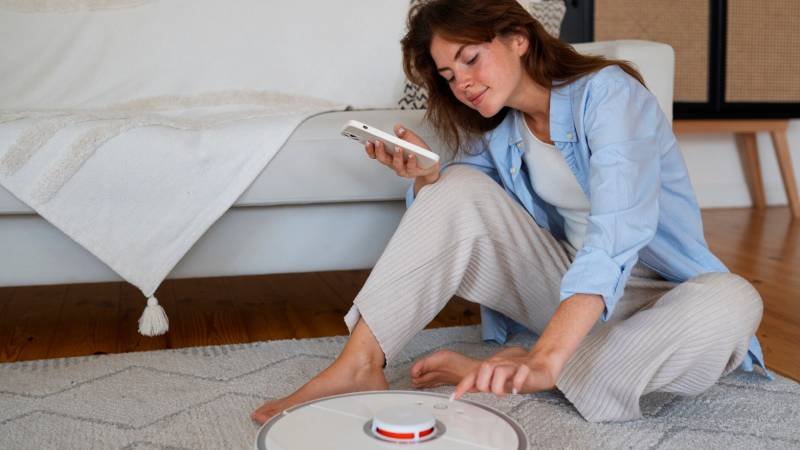
Gone are the days when a dehumidifier was just a basic box that you switched on and hoped for the best. Smart dehumidifiers have changed the game completely.
With built-in WiFi, clever sensors and the ability to control everything from your phone, they offer a level of convenience and precision that standard models simply cannot match.
If you are tired of constantly checking humidity levels or coming home to a damp house, these connected units might be exactly what you need.
The convenience of WiFi enabled dehumidifiers
One of the biggest advantages is being able to control your dehumidifier from anywhere. WiFi enabled dehumidifiers let you turn the unit on or off, adjust settings or check current humidity levels using a simple app on your phone. This is particularly useful for Home Dehumidifiers in holiday homes, Loft Dehumidifiers in rarely used spaces or even Garage Dehumidifiers when you are out at work. You no longer have to worry whether you left it running or if the humidity has crept back up.
How automatic humidity sensors improve performance
Smart models come with highly accurate sensors that constantly monitor the air. Instead of running at full power all the time, they automatically adjust their output to maintain your chosen humidity level. This intelligent moisture control not only gives better results but also saves energy. Many people notice their electricity bills drop because the unit is not working harder than necessary. The sensors also send alerts if something is wrong, such as a full water tank or a sudden spike in moisture.
Remote control dehumidifier features that make daily life easier
With a smart dehumidifier you can set schedules, create different modes for day and night, or even link the unit to other smart home devices. Some allow voice control through Alexa or Google Home. For larger properties, Large Dehumidifiers and Commercial & Industrial Dehumidifiers with remote monitoring give facilities managers peace of mind. They can check multiple units across different buildings without having to visit each site.
Practical uses around the home and workplace
Small Dehumidifiers in bedrooms or studies benefit hugely from smart technology. You can make sure the air stays comfortable while you sleep without the machine disturbing you. In offices or small commercial spaces, the ability to monitor and adjust from your desk or even from home is a real time-saver. The data logging features also let you see humidity trends over time so you can spot patterns and prevent problems before they start.
Are smart dehumidifiers worth the extra money?
They do cost more upfront than basic models, but the added convenience, better efficiency and precise control often make them worthwhile. If you travel a lot, manage multiple properties or simply want a more hands-off approach to moisture control, the smart features pay for themselves in comfort and peace of mind.
At the end of the day, smart dehumidifiers bring modern technology to one of the most useful appliances in the home or workplace. They take the guesswork out of humidity management and give you full control at the touch of a button. If you are thinking about upgrading your current setup, exploring WiFi and sensor-equipped models could be a step worth taking. You might be surprised how much easier drying your space becomes.
Case Study: Remote Humidity Monitoring Stops Holiday Rental Losing Money to Damp
The owner of a small holiday rental cottage in Cornwall was frustrated with damp problems during off-season months when the property sat vacant for weeks at a time. Humidity built up inside the house without anyone noticing, causing window condensation, mold, and musty odors.
He decided to add a WiFi-enabled smart dehumidifier to the main floor living area and a smaller unit upstairs in the hallway. The homeowner linked both units to a mobile app that monitored humidity and sent push notifications if the humidity levels changed.
The owner set the humidity threshold at 45% RH, with a baseline drying power that would increase if the humidity rose above 55%. When winter rolled around, he could now see what the humidity was like inside the rental property from his phone.
If humidity levels were high, he could remotely turn the units on to prevent condensation. He also got push notifications when the tanks were full so he could stop by and empty them on his way home from work.
The smart dehumidifiers kept indoor humidity levels balanced inside the rental home. Condensation wasn’t an issue anymore and musty odors that used to accumulate when the house was vacant no longer appeared.
Case Study Conclusion: Installing smart dehumidifiers allowed the homeowner to manage humidity levels from afar and only service the rental when necessary.
Smart Humidity Control FAQs
What is considered a smart dehumidifier?
A smart dehumidifier has WiFi capabilities and the necessary sensors to communicate with a smartphone app. This allows you to monitor humidity levels and adjust settings from anywhere you have internet access.
Can I control a smart dehumidifier with my phone?
Yes. The dedicated smartphone apps that accompany most smart dehumidifiers allow you to power the unit on and off, adjust humidity settings, set drying schedules, and receive low water notifications.
Are smart dehumidifiers energy efficient?
Many are. Smart dehumidifiers with automatic humidity sensors will only run when needed to maintain set humidity levels. This can drastically cut back on energy usage and running costs.
Will smart dehumidifiers work with my smart home devices?
Most newer models are compatible with Amazon Alexa and Google Home. With a smart home device, you can control humidity levels using voice commands or include the dehumidifier in automated smart home routines.
Can smart dehumidifiers be used for large homes?
Definitely. Industrial-grade smart dehumidifiers exist for use in large commercial buildings, homes with multiple floors, or anywhere moisture needs to be controlled on a larger scale.
Are smart dehumidifiers worth the investment?
If you value the convenience of being able to check humidity remotely, programming automatic drying schedules, and receiving low water notifications, most people would say yes. Smart dehumidifiers make monitoring and managing humidity much easier.