A whole-house renovation often starts before the first wall comes down. Furniture needs to be moved, closets need to be emptied, and years of unwanted belongings may need to be sorted out.
For a small project, regular trash service or a few trips to a disposal facility might be enough. A whole-house cleanout is different. The amount of junk and renovation waste can grow quickly, which is why renting a dumpster may be worth considering before work begins.
Having one place for unwanted items and approved debris can make the cleanout easier to manage and give contractors more room to work.
Why Clean Out Your House Before Renovating?
Clearing the house first keeps furniture, boxes, and unused belongings from getting in the way once construction begins. It also gives you a better idea of what you actually want to keep.
A room-by-room approach, like these tips on how to declutter your home and feel organized, can make a large cleanout feel less overwhelming.
When a Dumpster Makes Sense for a whole-house cleanout
A dumpster makes sense when the amount of waste is more than your regular trash service can handle. This may include old furniture, damaged shelving, carpet, cabinets, household junk, drywall, wood, and other approved materials.
It is especially useful when the cleanout leads directly into remodeling. Instead of making repeated dump runs, you can keep the container on-site while you clear rooms and start demolition.
How Much Waste Does a Whole-House Cleanout Create?
There is no single answer because every home is different. A lightly furnished house may create only a moderate amount of waste, while a property with a full basement, attic, garage, and several storage rooms can fill a dumpster quickly.
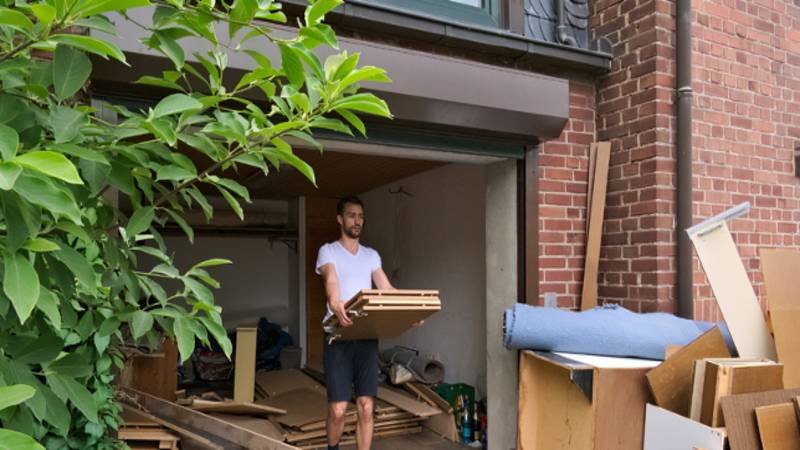
Bulky items such as mattresses, broken furniture, shelving, rugs, and old cabinets often take up more space than homeowners expect. Walking through the house before ordering a dumpster can give you a rough idea of how much material needs to go.
Choosing a Dumpster Size for a Home Cleanout
Dumpster sizes are measured in cubic yards. The right size depends on the amount of debris, the type of material, and whether you plan to use the same container during the renovation.
10- to 15-Yard Dumpsters for Smaller Cleanouts
A 10- or 15-yard dumpster can work well when you are clearing a few rooms, removing flooring, or getting rid of a moderate amount of household junk. These sizes may also be easier to place when driveway space is limited.
20-Yard Dumpsters for Larger Cleanouts and Remodels
A 20-yard dumpster is often a practical middle ground for a larger cleanout. It can handle furniture, carpet, cabinets, drywall, flooring, and other approved materials without taking up as much room as a larger roll-off container.
It can also be a good option when the cleanup will continue into the early stages of a remodel.
30-Yard Dumpsters for Major Whole-House Projects
A 30-yard dumpster may be a better fit for an extensive whole-house cleanout, especially when basements, garages, attics, and several rooms are being emptied at the same time.
Keep weight limits in mind. A larger dumpster does not mean you can load unlimited amounts of tile, plaster, brick, concrete, or other dense materials.
Dumpster dimensions and weight allowances vary by provider. Homeowners in Middlesex County, New Jersey, can review Eagle dumpster rental when comparing container sizes for cleanouts and renovation projects.
What Can You Put in a Dumpster During a Cleanout?
Most non-hazardous household junk and common renovation debris can go into a standard dumpster, depending on the provider. Furniture, wood, drywall, flooring, cabinets, and similar materials are commonly accepted.
Paint, chemicals, propane tanks, batteries, asbestos-containing materials, and some electronics may require separate disposal. Appliances, mattresses, and tires can also have special rules, so check with the rental company before loading the container.
Donate and Recycle Before Throwing Everything Away
A cleanout does not have to mean throwing everything away. Usable furniture, working appliances, tools, clothing, unopened building materials, and other household items may be worth donating, selling, or recycling.
Sorting these items before the dumpster arrives can save space and reduce waste. It may also help you rethink storage and layout during the remodel. These practical home upgrade tips can be useful when deciding which areas of the house need the most attention.
Where Should You Put the Dumpster Before Renovating?
The driveway is usually the most convenient location because it keeps the dumpster close to the house and easy to reach.
Make sure the delivery area is clear of vehicles, low tree branches, gates, and overhead power lines. You should also avoid placing the container where it could block contractor access, garage doors, or material deliveries.
If the dumpster needs to go on a public street, check whether your city requires a permit.
Is Renting a dumpster better than making dump runs?
For a small cleanout, using your own vehicle may be fine. For a whole house, repeated trips can quickly become inconvenient.
You have to consider fuel, disposal fees, loading time, unloading time, and whether your vehicle can safely carry bulky materials. A dumpster keeps the waste at the property until pickup, which can make it easier to clean one room at a time without constantly stopping the project.
Plan the Cleanout Before Renovation Starts
If you are renting a dumpster, schedule the cleanout before contractors need full access to the house. Start with storage areas and rooms that contain the most unwanted belongings, then separate items to keep, donate, recycle, or discard.
A dumpster is not necessary for every remodel, but it can be useful for a large whole-house cleanout. Choosing the right size, knowing what can go inside, and planning where to place it can make the cleanup easier and give the renovation a cleaner starting point. See more.