
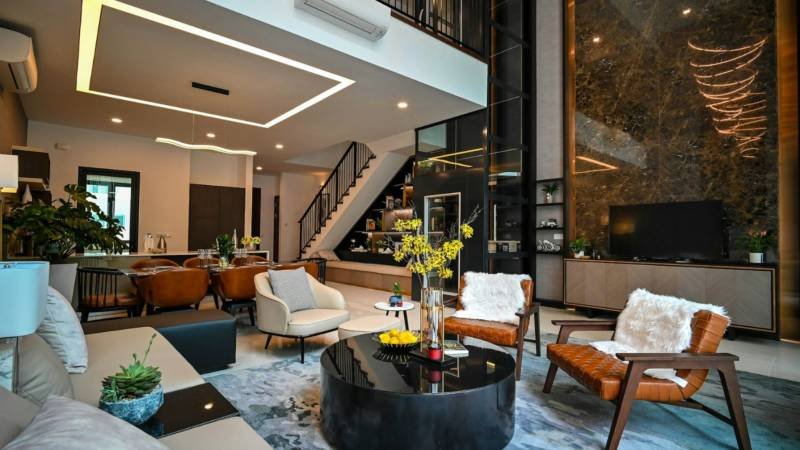
When browsing photos of other people’s rooms at night, you may feel this mysterious fascination with international home design trends. Be it a tiled patio of a house in Morocco, a minimalistic kitchen in Japan, or a sun-blanched balcony in Portugal, these pictures are available to you faster than the furniture itself.
Luckily, you do not need a plane ticket to incorporate the best practices from the world of interior design into your own home decor. Here are the ways you may find inspiration from the trends of other countries without getting buried in an overwhelming feed of irrelevant information.
Follow accounts specializing in regional interior design trends rather than accounts collecting everything under one Feed
While most people begin their search for design trends with accounts that collect everything from all around the world into one feed, this approach is useful for getting an overview. Yet, it does not give you insight into the specifics of interiors in different regions.
In order to actually observe what distinguishes Scandinavian interiors from Mediterranean or any other styles, it is important to follow specialized regional accounts.
Find interior stylists, architects, and studios that post in the local language. There is no need for you to know every caption — the translation services built into most social platforms will take care of that. More importantly, the pictures that you see will reflect the design choices made under the influence of local climate, materials, and lifestyle.
Several examples of phrases to use while creating such a list:
- City/country name + “interior design” or “home styling” in the local language
- Independent design studios rather than huge retail companies, since studios post about the process and reasoning behind their decisions rather than trying to sell you a product
Use Pinterest Boards From Other Regions
Pinterest has always remained one of the most valuable resources for tracking design trends, since its search feature allows you to get more specific. When typing something like “Brazilian apartment renovation” or “Korean kitchen layout,” you get boards curated by local people rather than aggregators reposting the same viral content.
Create separate boards for each region you are interested in. At first glance, this advice may seem obvious, yet it makes the platform’s algorithm work differently. After several weeks, your feed will contain more targeted inspirational content.
Read Architecture and Design Magazines Published Abroad
There are many reputable architecture and design magazines in other countries that are not famous outside their borders. These publications usually cover projects that are months away from being seen on international websites. What is more, their writers focus on the reasoning behind decisions rather than just the pictures themselves.
Sometimes these magazines require subscriptions or have access limitations for foreign audiences. In case you encounter this problem with a paywall or restricted content, a VPN will allow you to view the magazine like a reader from the country of publication.
This is especially helpful for magazines that publish their exclusive design features in their local market before republishing them elsewhere with shortened versions of the stories. This is not about avoiding copyright restrictions; it is simply about accessing content that is meant to be available for everybody.
After finding 2–3 such magazines, try to regularly visit them rather than wait for the information to appear in your social media feed. By the time it shows up in your feed, the trend will probably already be outdated.
Watch Home Tours in Videos Created by Local Creators
Although pictures are very informative, videos allow you to observe the functionality of a room, and this is where you can see why certain decisions were made in interior design.
A home tour recorded by someone from Copenhagen or Ho Chi Minh City will show you storage solutions, lighting choices, and furniture arrangements that were created in response to local constraints.
In order to get better results in your search, it is better to use phrases with concrete parameters rather than vague ones. “Apartment tour Berlin” will give you more appropriate results than just “home tour.”
Besides, watching a couple of home tours in the same city gives you an opportunity to observe patterns that are impossible to notice from just one picture. For example, you will see how people in humid climates avoid heavy upholstered furniture or how people in small apartments in dense cities use multi-purpose furniture.
Join Design Forums and Local Facebook Groups
While social platforms are great in terms of content, forums and groups provide more sincere conversations. People ask questions regarding their renovations, post before-and-after pictures without trying to make them perfect for the algorithm, and discuss design choices in ways that show what is really trending in their region right now.
It is better to search for design and renovation groups that are connected to specific cities or countries. In contrast to public social media feeds, such groups are less curated, and this allows you to see real budgets, actual materials, and honest opinions about what worked and what did not.
There is no place for such an amount of information elsewhere.
Visit Foreign Furniture Marketplaces
Retail websites show trends faster than almost anything else since they depend on what people are buying. Even without any purchasing intentions, browsing foreign furniture marketplaces will give you an idea about what colors, forms, and materials are currently trendy in that region.
This method is especially effective for discovering shifting trends, since increases in the popularity of certain materials or furniture on regional marketplaces are often discussed months later.
Periodic visits and browsing of new arrivals will allow you to track these shifts.
Attend Design Weeks and Local Exhibitions Online
Design weeks and furniture fairs take place all around the world throughout the year, and most of them have extensive online coverage. This is where new materials, colors, and designs are often introduced before being used by retail companies and social networks.
Instead of trying to follow all design weeks around the world, it is better to choose 2–3 design weeks that are related to the regions you are interested in and follow them intensively during their event periods.
Most organizers post daily recaps, interviews with designers, and photo walkthroughs of booths.
This will allow you to track the trends that professionals in these regions believe to be new.
Set Alerts for Certain Design Terms
In order to have a constant flow of information about design trends in other regions, you may set alerts for terms related to these regions.
This may be done either via a search engine’s alert feature or via an RSS reader if you prefer to gather information in one place.
Terms you can use include:
- A city name and “interior trend”
- A specific material and a country
- The name of a regional design movement
This will allow you to receive a steady stream of articles in your email or RSS reader.
Discuss Your Ideas With Real Residents of This Region
All the information that you gather on the internet is not enough without discussing it with others. Short communication with a person who lives in the country you are interested in may explain many things that you cannot see in pictures alone.
A resident of a humid coastal climate will tell you why some fabrics are not used in the region, or why a certain design became popular due to reasons that have nothing to do with style but rather with practicality.
Such discussions do not need to be long or formal. A couple of questions about why something is popular in a certain region will give you additional understanding of what you saw in pictures and will lead you to smaller sources that you could not find on your own.
Summary
The process of discovering international home design trends on the internet does not presuppose increased consumption of content but rather a more targeted selection of sources.
The methods of following regional accounts, reading local publications, watching home tours of specific cities, and browsing foreign retail websites altogether provide much richer and more precise information.
All these methods require no special skills or significant time investment. They require only targeted searching and interest in finding sources that are not specifically created for an international audience.
Start with one or two of the suggested methods, see which ones are suitable for you, and continue developing the rest from there. Gradually, you will develop your own style based on much more interesting information than any trend report may provide. See more.