
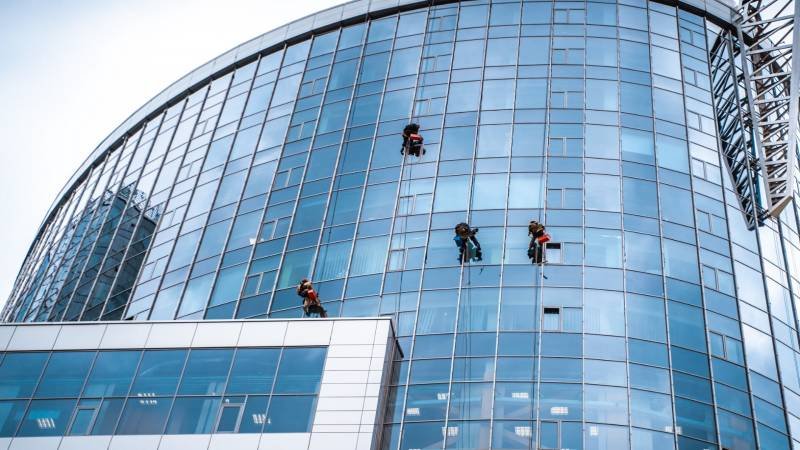
High-rise buildings depend on a small, specialized workforce to keep their exteriors clean, inspected, and maintained. Window washers, facade inspectors, and building envelope technicians routinely work hundreds of feet above ground, suspended by cables and platforms that must perform flawlessly every single time. The equipment that anchors this work, most notably the roof davit system, rarely gets public attention, yet it is one of the most important safety mechanisms in the commercial building industry. Firms like Title 8 Builders have spent years refining how these systems are engineered, inspected, and integrated into building design, and understanding how they work reveals why they matter so much to worker safety.
What a Roof Davit System Actually Does?
A roof davit is a mechanical arm, usually made of steel or aluminum, permanently or temporarily mounted to a rooftop. It extends outward past the building’s edge and supports the rigging, ropes, cables, and suspension equipment, used to lower window washers or maintenance workers down the facade. Rather than relying on a worker to rig equipment directly to a parapet wall or an improvised anchor point, the davit provides a fixed, load-rated connection designed specifically for that purpose.
The core function is simple but critical: it transfers the weight of the worker and their equipment safely to the building’s structural frame. Every davit arm is rated for a maximum working load, typically calculated with a significant safety margin above the actual weight it will bear. According to OSHA’s standards for powered platforms and suspended scaffolds (29 CFR 1910.66), anchorage points used for fall protection must be capable of supporting at least 5,000 pounds per attached worker, or be designed with a safety factor of at least two, under the supervision of a qualified person. Roof davit systems are engineered to meet or exceed these thresholds.
Why Anchor Point Reliability Matters So Much
Fall-related incidents remain one of the leading causes of workplace fatalities in construction and building maintenance. The Bureau of Labor Statistics has consistently reported that falls to a lower level account for a substantial share of fatal occupational injuries each year, and a significant portion of these involve failures at the anchor point rather than the harness or lanyard itself. This is precisely why davit systems are engineered rather than improvised.
Unlike a temporary rope tied to a rooftop fixture, a properly installed davit arm is:
- Load-tested and certified before use, with documentation kept on file for inspectors and building owners
- Positioned based on structural engineering calculations specific to the building’s roof design
- Inspected on a recurring schedule, often annually, to confirm the base plate, arm, and connection points haven’t degraded
- Designed with corrosion-resistant materials suited to the local climate, since rooftop exposure to rain, wind, and temperature swings accelerates wear over time
- Compatible with multiple rigging configurations, so the same anchor point can support window washing, facade inspection, or repair work without modification
This combination of certification, engineering, and routine inspection is what separates a professional davit system from a makeshift anchor. Contractors involved in installing these systems, including teams at Title 8 Builders, generally work alongside structural engineers to confirm that a building’s roof and parapet can actually bear the loads the davit will transmit, a step that is easy to overlook but essential to long-term safety.
How Davit Systems Fit Into a Building’s Broader Safety Plan
A roof davit is rarely a standalone piece of equipment. It’s usually one part of a documented fall protection plan that includes tie-back anchors, guardrails, warning lines, and sometimes horizontal lifeline systems. Building codes in many jurisdictions now require this kind of integrated planning at the design stage, particularly for structures over a certain height, because retrofitting anchor points after construction is far more expensive and structurally limited than planning for them in advance.
This is where the involvement of experienced contractors becomes especially relevant. During the assessment and design process, firms such as Title 8 Builders can account for davit sockets, base plates, and structural reinforcement so the system is integrated with the roof structure rather than added later as an afterthought. This approach can produce more reliable anchor points because the load path runs through structural members designed to withstand the forces generated by the davit system.
Maintenance crews benefit from this coordination in ways that aren’t always obvious. A well-planned davit layout reduces the amount of rigging and repositioning workers need to do, which in turn reduces the number of times they’re exposed to transition risks, the moments when a worker is moving between anchor points and is briefly less secured. Fewer transitions generally mean fewer opportunities for error.
Inspection and Maintenance Realities
Even a well-engineered davit system requires ongoing attention. Steel corrodes, welds can fatigue under repeated cyclic loading, and base plate fasteners can loosen over years of thermal expansion and contraction. Most manufacturers recommend annual inspections at minimum, with more frequent checks in coastal or industrial areas where corrosion accelerates. Building owners are generally responsible for maintaining inspection records, and many jurisdictions require this documentation to be available on request from regulatory bodies or insurance providers.
Workers themselves also perform a pre-use inspection before every job, checking for visible cracks, corrosion, loose bolts, or deformation in the arm. This layered approach — manufacturer certification, periodic professional inspection, and daily pre-use checks — reflects an industry understanding that no single safeguard is sufficient on its own.
What We’ve Learned
Roof davit systems represent a quiet but essential piece of infrastructure in the world of high-rise maintenance. They exist because gravity doesn’t forgive mistakes, and because the workers who clean and maintain tall buildings deserve equipment built to a standard, not to convenience. From structural engineering and load certification to routine inspection, every stage of a davit system’s life cycle is designed around one goal: keeping the person at the end of the rope safe. Firms like Title 8 Builders that specialize in integrating these systems into building design help ensure that safety isn’t an afterthought bolted onto a rooftop, but a planned, load-tested part of how a building is built to last. As building heights continue to grow and maintenance demands increase, the engineering behind roof davit systems will remain a foundational, if largely unseen, part of keeping workers safe hundreds of feet in the air. See more.